HOVER PREVIEW · CLICK TRAVEL · T TOUR · ← → BROWSE · ENTER READ
SHT 00 · The index · 185 essays plotted
The mind is a fire,to be ignited
Research, blueprints, workshops, working systems.
Every star behind this headline is one of 185 real essays — hover one to preview it, click to read. Catch an ember as it rises.The sky above plots all 185 essays. Explore the full constellation on a larger screen, or browse every essay below.
PLATE 00 — THE CORPUS · ALWAYS-NIGHT CANVAS, MOUNTED185 STARS
Who's writing

Plate I · MMXXVI
I do this work because I love it — and everything I learn, I give away.
Hi, I'm Zachary.
I work on the Applied AI team at WorkOS, shipping internal and customer-facing systems, automations, and apps that cut toil — and bringing the rest of the org along with workshops on AI fundamentals, training, office hours, and support.
I'm also an independent AI researcher working on local inference, inference engineering, and cost optimization. Through my consultancy, Mind on Fire, I do custom workshops, software and systems development, and bespoke training — on my own platform and as a Hone coach. For the last two years I've taught engineers everything from inference to agentic development, loops, scheduling, and skills at scale at the AI Engineer conferences in London, New York, and San Francisco.
- Currently
- Applied AI · WorkOS
- Consultancy
- Mind on Fire
- Researching
- Local inference, inference engineering, cost optimization
Applied AI, drawn to scale.
I love to research, experiment and publish my learnings as interactive experiences for everyone to benefit from.
 PL-001ATTENTIONThe TransformerEvery frontier model runs the same circuit. This working drawing traces it end to end: how seq2seq attention became the transformer, how decoder-only models generate, and how tokens, attention heads, position, residual blocks, sampling, and KV caching fit together.
 PL-002EMBEDDINGSThe Embedding SpaceFrom the distributional hypothesis and word2vec to contextual sentence encoders: how embeddings are trained, compared, indexed with HNSW, migrated, and evaluated in production.
 PL-003RETRIEVALThe RAG PipelineFrom open-domain question answering to production RAG: ingestion, chunking, BM25 and dense retrieval, reranking, context assembly, citations, evaluation, and failure tracing.
 PL-004TOKENIZATIONThe TokenizerHow tokenization works: BPE tokenizer training, ordered merges, byte fallback, token IDs, costs, multilingual tradeoffs, and why LLMs use tokens.
 PL-005AI ENABLEMENTThe WorkshopA complete working drawing for an AI training workshop: how to design, build, deliver, and follow through on an AI workshop for engineers or corporate AI training that works.
 PL-006MODEL SELECTIONThe Model SheetA model's name is a datasheet most people never learn to read. This drawing goes field by field — parameters, dense versus MoE, training stage, distillation, abliteration and merges, quantization (GGUF, k-quants, imatrix, GPTQ/AWQ) — then does the memory math that decides what runs locally, sources and vets a model on Hugging Face, and tests it on your own task instead of trusting a benchmark.
 PL-010INTERPRETABILITYThe Attention HeadWhat is an attention head, and how would you prove one does what you think it does? A from-zero walk through a single head in GPT-2 small: what it reads, what it writes, the copying behavior you can watch in its attention map, and why that picture is the weakest evidence there is — with logit attribution and ablation as the stronger tests.
 PL-011SERVINGThe Inference EngineA worked guide to LLM inference memory, KV-cache paging, continuous batching, prefill, decode, quantization, and latency-capacity planning.
 PL-012AGENT SECURITYThe GuardA trust-boundary threat model for prompt injection in tool-using agents, with capability scoping, external authorization, and testable security metrics.
 PL-013GENERATIVE VISIONThe Diffusion ModelA coordinate-consistent visual guide to diffusion and flow: forward noise, learned denoising, guidance, latent compression, DiT, sampling, and flow matching.
 PL-014EVALUATIONThe BenchmarkA benchmark score is manufactured, and every step leaves a trace. Trace an AI benchmark number back through sampled tasks, prompts, scorers, aggregation, uncertainty, and contamination to the decision it can actually support.
 PL-015PERSONAL CONTEXTCTXEvery agent I use — terminal, browser, phone, across Anthropic and OpenAI — started every conversation knowing nothing about me. So I built one shared memory they all plug into: a technical blueprint for a provider-agnostic personal context engine — one Postgres table, a hybrid retriever with an LLM reranker, and a scope wall enforced by the database, not by prompts.
 PL-016LOCAL SPEECHThe Voice BoxOpen-weight speech synthesis got good enough to replace a paid API. This is the working drawing for a local text-to-speech studio built on Fish Audio S2 Pro and MLX — every measurement, both bugs, and the discovery that the model ships with no voices at all.
 PL-017MODEL ECONOMICSThe Cost CurveDeepSeek's retrained V4 Flash 0731 moved the model pricing baseline for everyone. This drawing works the full token-dollar ledger: MoE bandwidth arithmetic, quantization, the nine agent benchmarks where a budget model beat the flagship, cache-hit economics, verbosity-adjusted task cost, the price war forcing 80% cuts on the frontier, and the structural trap forcing labs to race their own depreciation curve.
 PL-018INFERENCE COSTThe Price FloorWhat does it actually cost to run a frontier-class open model? I measured DeepSeek V4 Flash 0731 across every layer in August 2026: why the same weights run 5x faster in a different inference engine, prefill versus decode, why speculative-decoding gains don't transfer between stacks, measured cloud throughput against the listed figures, the prompt-cache price that dominates agent workloads, the sold-out market for fast inference, and the monthly crossover where a home Blackwell rig beats the API.
 PL-019AGENT FACTORYThe Eval HarnessI built pt, an attention-first agentic terminal in Go: durable work contracts, parallel agent lanes with byte-verified delivery, workers on rented orbs. The factory merged nearly 400 PRs in two weeks, and I still couldn't drive my workday through it. This is the blueprint and the retro: what got built, what failed to get traction, the two ctx-backed capabilities that stuck, and the new direction: ctx as a complete, verifiable graph of work that any harness or future model can drive.PL-019EVALUATIONThe Eval HarnessA complete record of 60 coding-agent runs across an 80.76 GiB local DeepSeek quant, hosted DeepSeek, and hosted Claude: task design, hidden scorers, repair passes, provider recovery, exact cost, uncertainty, and workload fit.
 PL-020AI EVALUATIONDesigning AI EvaluationsA generic blueprint for designing AI evaluations: define the decision, version the system, build representative task sets, choose valid scorers, measure uncertainty, analyze failures, and connect offline tests to production evidence.
The whole machine, pulled apart.
Exploded-view explainers that take one everyday act — asking an AI a question, loading a web page, calling a tool, pushing a commit, signing in with a passkey — and separate every layer so you can watch the request travel through each one.
 PL-EX-001The Inference StackHow an AI response gets madeFollow one request through the software and hardware that runs a language model, then watch each generated token return to the chat box.
 PL-EX-002The FetchWhat happens when you fetch a URL?Follow one browser navigation through URL parsing, DNS, the local network, internet routing, encryption, edge delivery, the origin server, and the rendering pipeline.
 PL-EX-003The Tool CallWhat happens when an agent calls a tool?Follow one function call from a model’s tool_use block through schema checks, permission, credentials, transport, and execution, then watch the observation return.
 PL-EX-004The PushWhat happens when you git push?Follow one commit from git push origin HEAD through refspecs, a thin pack, HTTPS, receive-pack, and the ref update, then watch the status line come back.
 PL-EX-005The PasskeyWhat happens when you sign in with a passkey?Follow one passkey login from the username field through a WebAuthn challenge, the authenticator, an assertion signature, and the session cookie that comes back.
§ 02 · Workshops · From $15kQ4 open
Taught from the bench, not the slide deck.
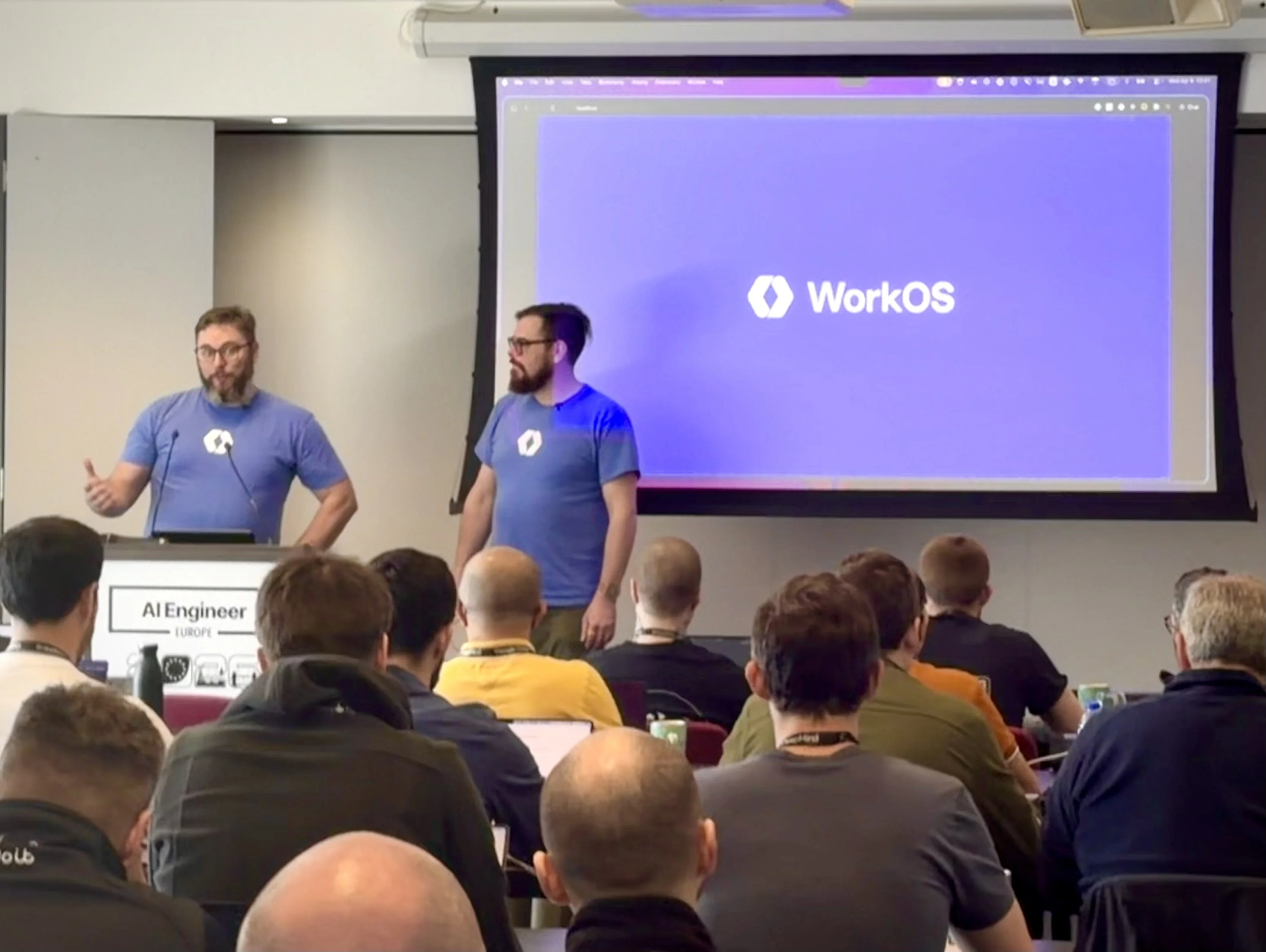
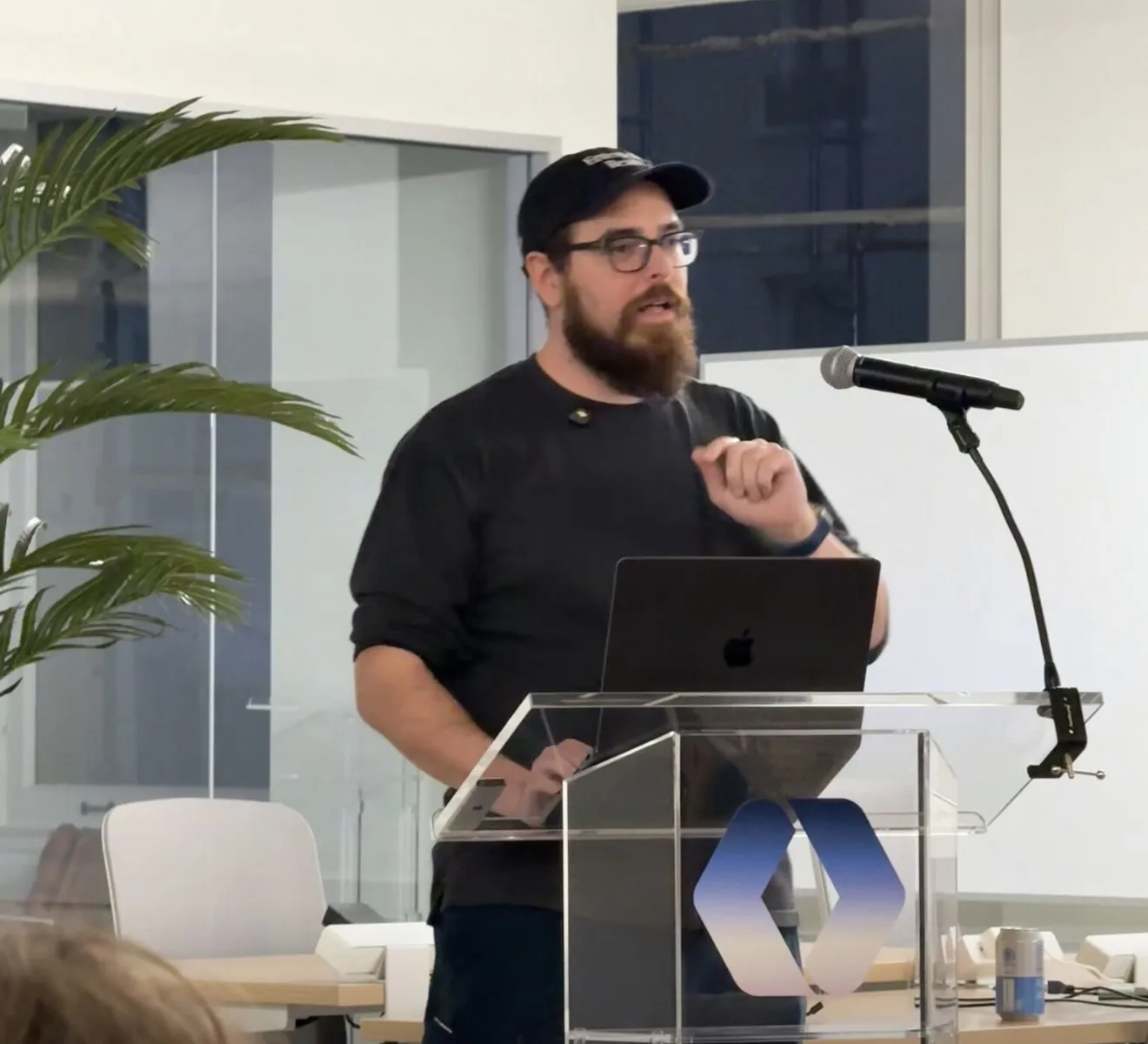
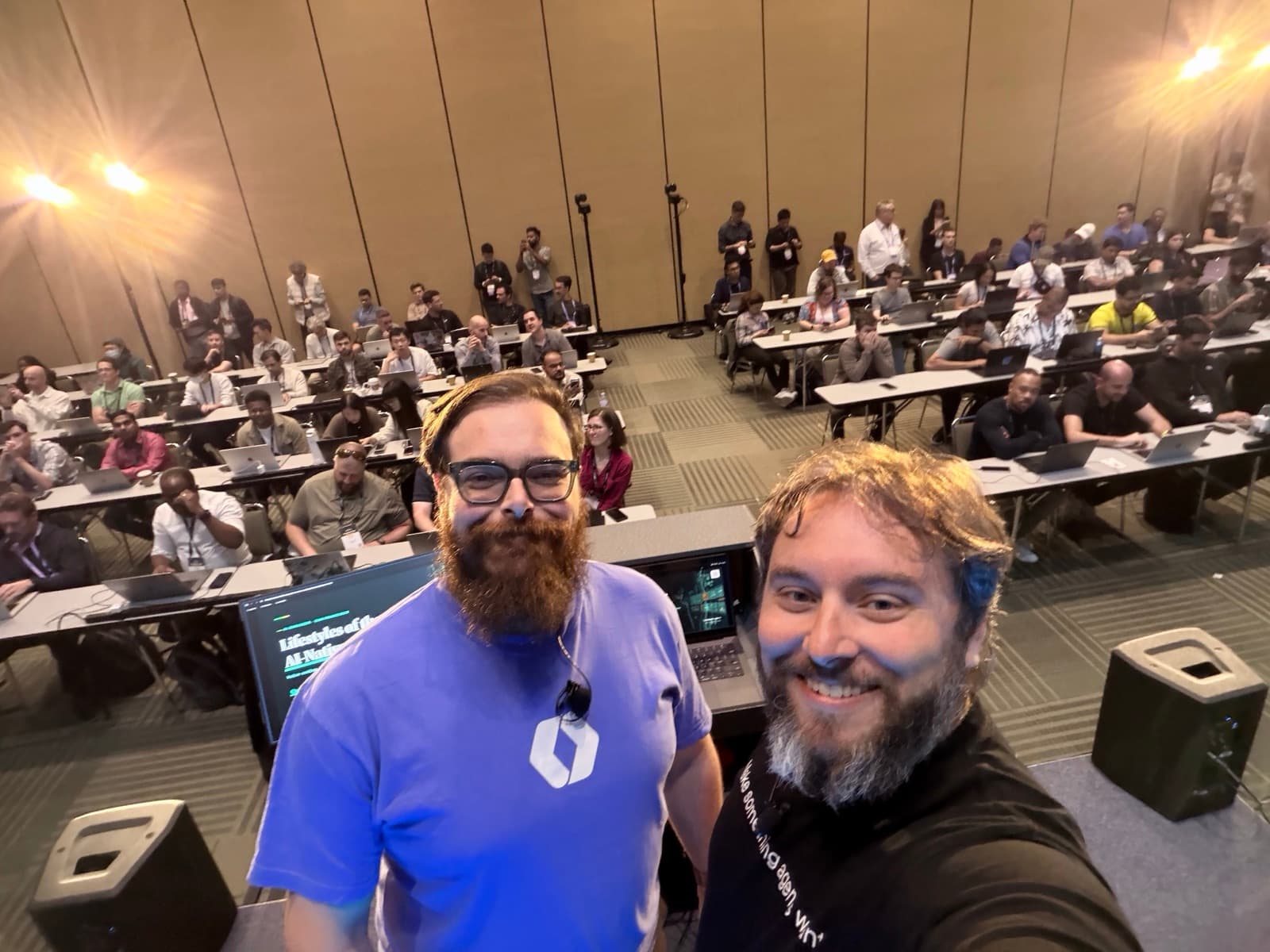
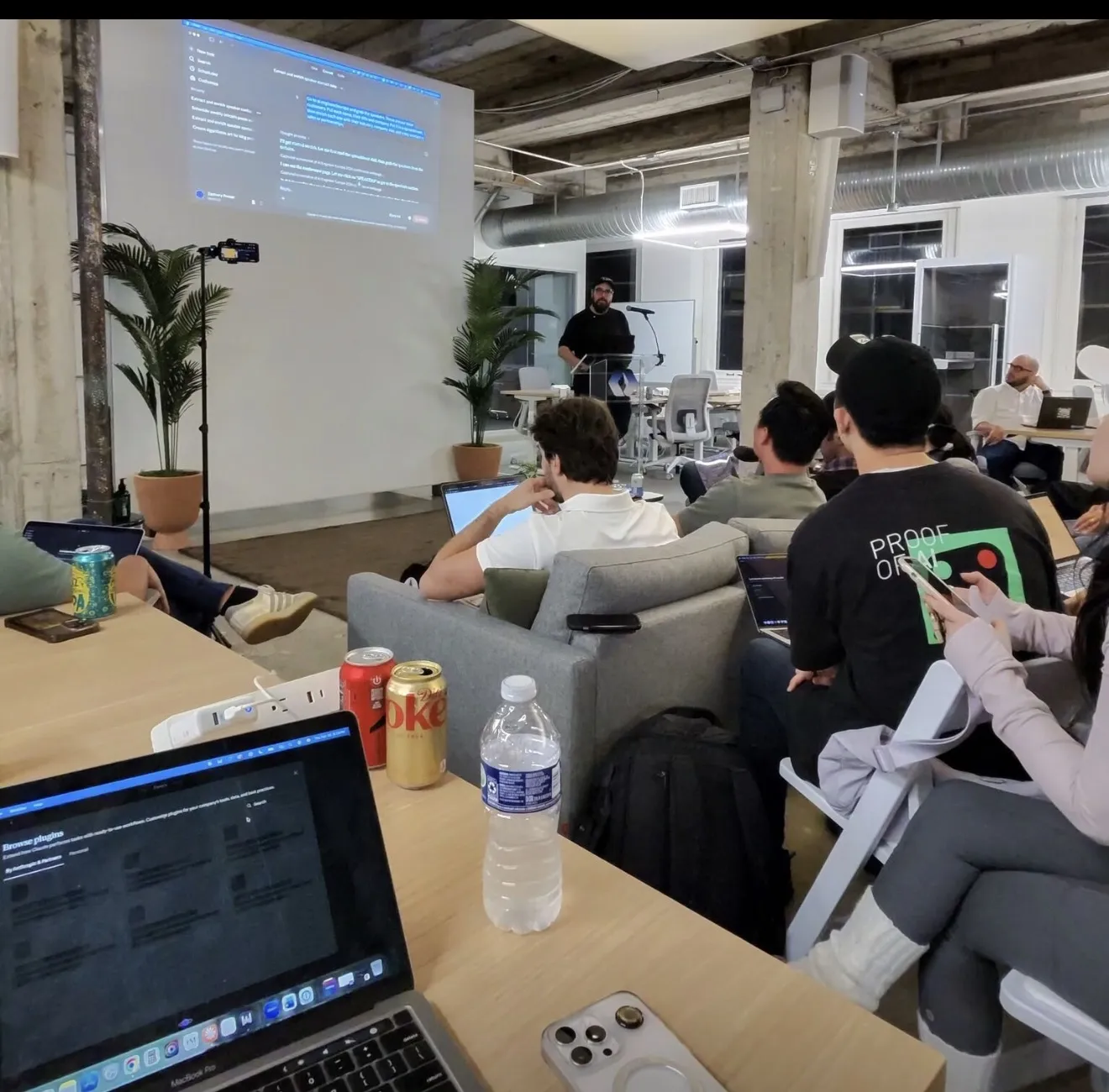
For the past two years, I've been on the road teaching AI to engineers in hands-on workshops at the AI Engineer conferences in London, New York, and San Francisco.
The workshop material comes straight from the research above — real cost curves, evals your team can rerun. We embed inside your pods, ½ to 2 days, and leave you with working workflows and named champions.
⟡ Built with Anthropic⟡ 800 registrations, last public run⟡ “The gold standard for AI Engineer content” — swyx⟡ Taught at AIE World's Fair SF · London · WorkOS × Anthropic
§ 03Publications
Full list →arXiv · 2510.25819 · Oct 2025
Identity Management for Agentic AI
With Tobin South, Alex Pentland (MIT), and others.
Open source
GitHub →coding-agent-eval-harnessopen benchmark harness for coding agentsNEWcloud-nukeAWS resource cleanup, safely★ 3,121cf-terraformingTerraform from existing Cloudflare config★ 1,324git-xargsrun commands across many repos at once★ 1,086handwavewatchOS app controlling Claude Code from your wrist—portfoliothis site — Next.js 16, Blueprints, 9 demos—
§ 04
On stage
All talks →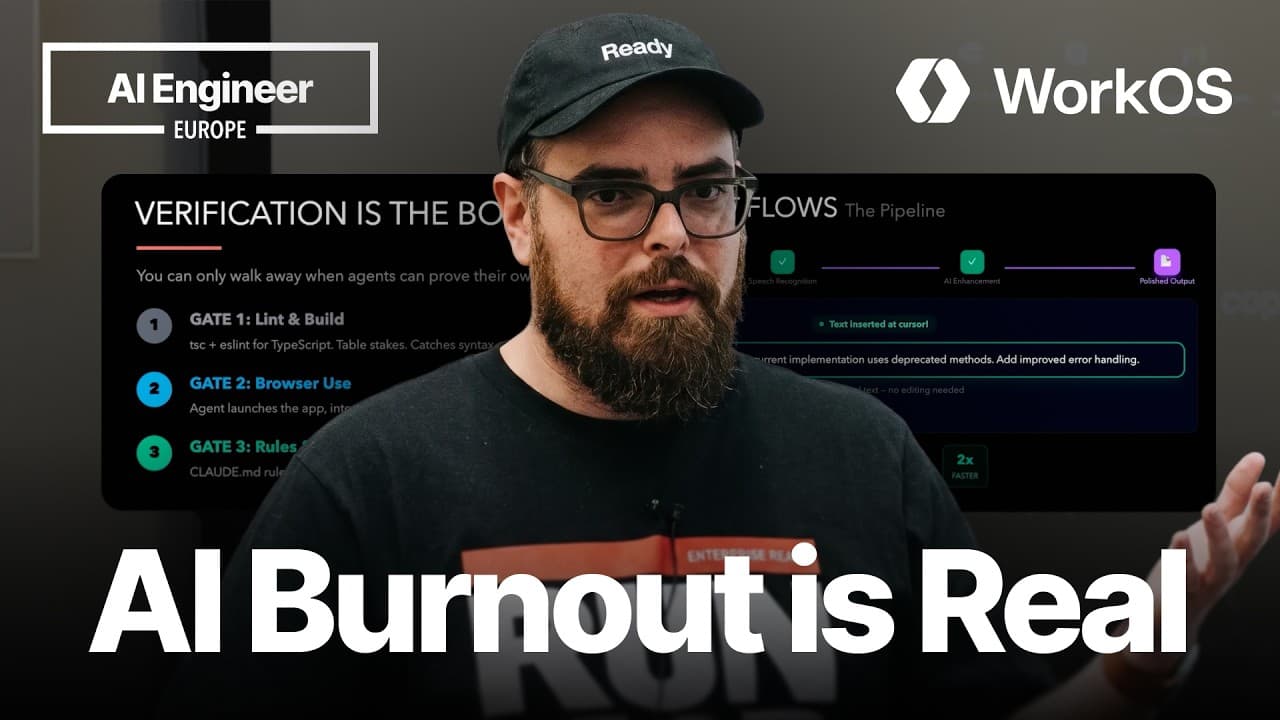
 DevSecCon 2025 · KeynoteModern AI and SecurityWorkOS × AnthropicClaude Cowork GTM Workshop
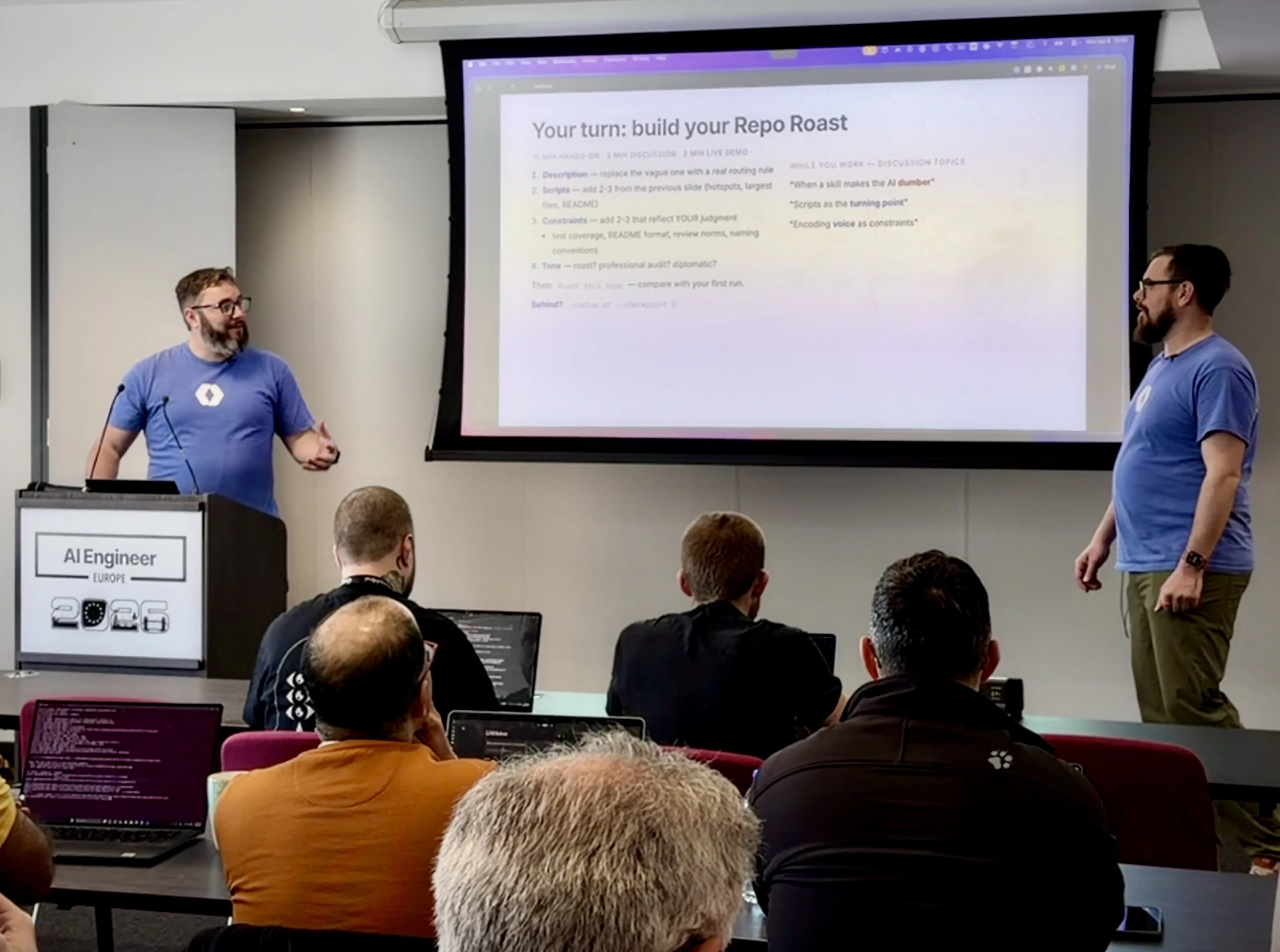 AIE London · WorkshopSkills at Scale
AIE World's Fair — SFAI Engineering LondonDevSecCona16zWorkOS × Anthropic
§ 05
Career
14+ Years Engineering ExperienceWorkOSApplied AI2025–nowAI workflows, internal tooling, developer education. Created the Claude Cowork workshop with Anthropic.
WorkOSDeveloper Education2024–25Built and led the developer-education surface at WorkOS — documentation, workshops, and video.
PineconeStaff DevRel2023–24RAG pipelines, AWS reference architectures, dev education during the vector DB explosion.
GruntworkTech Lead2020–23Built git-xargs (1K★), contributed to cloud-nuke (3.1K★). Multi-account AWS, production IaC.
CloudflareSenior SWE2017–20Joined at ~100 engineers. Built cf-terraforming (1.3K★). APIs, edge infra, dev tools at scale.
Regularly advising hedge funds and PE firms on AI infrastructure via AlphaSights, Guidepoint, Tegus, GLG, Coleman.
§ 05 · Measured reach — trailing 12 moCareer record above
12.4MSearch impressions / yr
52.5KSearch clicks · avg pos 7.9
137KVisitors / yr · +21% YoY
179KPage views / yr · +18%
6,000+Newsletter subscribers
0Search Console + Plausible · trailing 12 mo12.4M
🔥 Mind on Fire — independent AI consultancy
Local inference economics, eval methodology, and systems from silicon to prompt.